YouMe
An inclusive sexual education app for LGBTQ+ youth
YouMe is an inclusive sexual education app designed for LGBTQ+ youth. Over six weeks, in a team of five, we went from initial research to a fully interactive prototype. The project came about during pride month, when my team and I wanted to contribute something meaningful for the LGBTQ community.
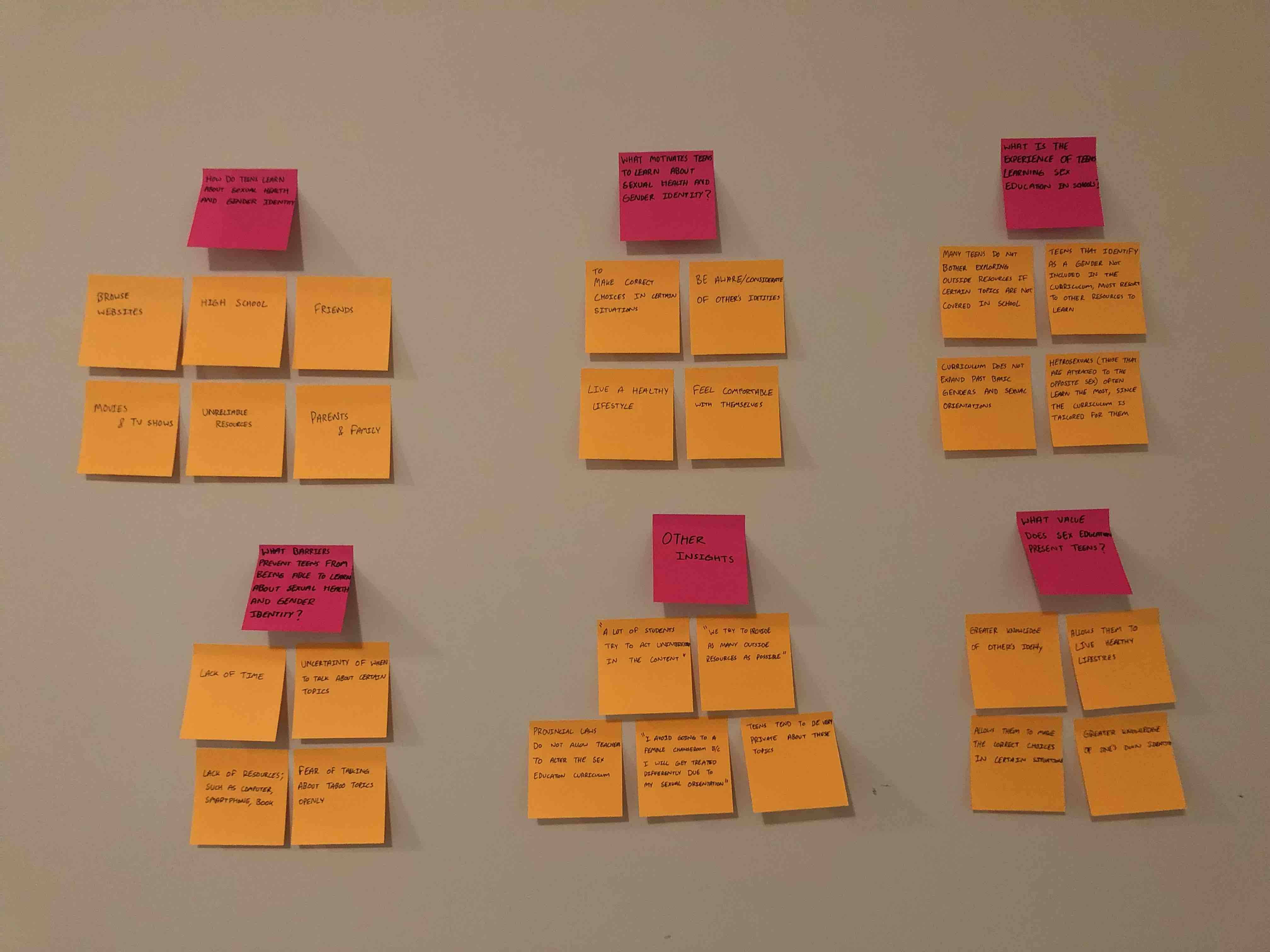
Through surveys and interviews with students and teachers, we found that 68% of participants learned about sexual health and identity online rather than in school, and current Canadian curriculum lacks information tailored to LGBTQ+ youth. We set out to bridge that gap with a mobile app that offered a personal, private learning experience.
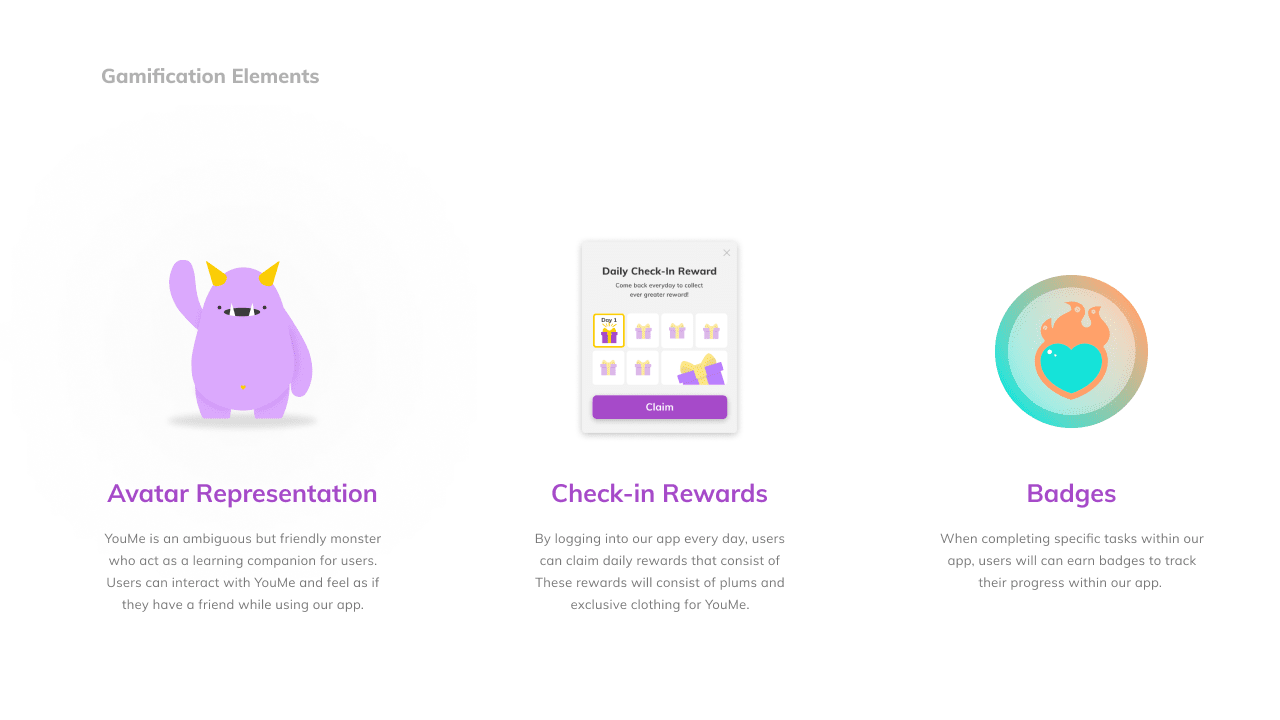
We designed five core features, each reinforcing the others. The app uses gamification to keep learners engaged, rewarding progress with coins they can spend on customization. The tone was important: friendly enough for teenagers without undercutting the seriousness of the subject matter.
Learn. Users choose from a variety of topics, from relationships to reproduction, and work through lessons at their own pace using articles and videos.
Apply. Quick interactive quizzes let users test what they've learned and reinforce key concepts.
Discover. Daily content surfaces stories and advice that users can apply in their own lives, encouraging them to come back regularly.
Play. Completing lessons and quizzes unlocks mini-games that users can play solo or with friends.
Customize. Coins earned through progress can be spent on avatar and theme customization, giving learners ownership over their experience.
YouMe was a finalist at the 2019 Vancouver UX Awards. The project taught me how to design for a sensitive subject without losing accessibility, and how gamification can be more than a gimmick when it genuinely serves the learning goals.